Tag: Video game news (Page 8 of 20)

A Tim Schafer Designed “Game of Thrones” Style Strategy Game? Yes, Please

1f83f18cd4b89f77b8462997d06b2437_large

After Tim Schafer was done with one of the most successful Kickstarter campaigns of all time for his studio Double Fine’s entrant into the adventure genre Schafer once helped perfect, many expected to not hear from the company until “Broken Age” was completed.

It’s somewhat of a surprise then to hear today that Schafer and co. are already working on another Kickstarter title before “Broken Age” even has a confirmed release date. While it’s initially troubling to think of Double Fine’s new offering “Massive Chalice” as a reason for them to reach into your pockets again, once you actually begin read about the game, you may take up that internet joke and start willingly throwing money at your screen.

Described as a turn based tactical RPG that sees you command generations of heroes and try to repel demon hordes from a vast and intricate fantasy land ruled by factions, “Massive Chalice” cites its inspirations as games like  “Fire Emblem,” “Final Fantasy Tactics,” and “X-Com,” but also mentions the influences of TV shows like “Game of Thrones.” Collectively, of course, those are known as some of the best things ever.

b21487e782cce3a4472dee539a56f7a0_large

In, fact, much of “Massive Chalice” reads like a best of. You’ve got the feuding factions of “Game of Thrones,” the permadeath system of “Fire Emblem,” the tactical map design from the “Total War” series, and the combat style of “XCOM” all blended together and topped with that unique dialogue and general feel that Schafer studios usually provide.

It’s that last part that really matters, as if this was Peter Molyneux preaching a game where you control a faction over generations in a multi-faceted, kingdom consuming war involving mysticism and a variety of in-depth strategy elements, it’d be easy to dismiss it as all hype. However, Schafer (and for that matter project lead Brad Muir), have a history of always delivering an experience that may not be perfect, but is noteworthy and unlike anything else regardless of where it draws inspiration.

By the project’s own admission, “Massive Chalice” is unlike anything the studio has ever attempted. Whenever one of the most creatively exciting developers out there decide to step out of their comfort zone, that’s a cause to take notice of, and one that may easily be worth the $20 backing price.

The Top 5 Biggest Gaming Mistakes Microsoft Has Made

The popular theory that no press is bad press was put to the test for Microsoft when their unveiling of the Xbox One was met with a series of very humorous memes, and a stunningly low approval rating, that many would have a hard time calling good press.

As bad as it was though, it’s not exactly the worst tragedy in the history of mankind, the video game industry or, for that matter, even Microsoft’s gaming division.

So while the controversial Xbox One may prove to be their biggest bust of all, for now let’s all keep things in perspective by revisiting the top five biggest mistakes Microsoft has ever made.

5. The Duke

Xbox-Duke-Controller

A controller is one of the most important parts of launching a video game system, and when that system is your first one ever, may even come to define part of your image for all time.

If that is true, then unfortunately part of Microsoft’s image will always be that of a big fat failure.

“The Duke” as it would commonly be referred to, was a gargantuan gaming controller recognized by Guiness as one of the largest of all time, and by everyone else as one of the worst. Awkward for most, and impossible for some, “The Duke” would later be phased out in favor of the Japanese model “Controller S.”

Though it would lead to one of best controller designs of all time in the “360 Wireless,” few will ever forget the pain and hand aches associated with “The Duke.”

4. HD-DVD

800px-Xbox_360_HD-DVD_Drive

Though Blu-Ray hasn’t exactly set the world on fire in the way that DVD’s did, Toshiba’s similar “HD-DVD” format didn’t even make a spark.

Yet when it came time to support a next-gen disc format, which one do you think Microsoft chose?

In a way it’s difficult to fault them for doing so, since at that time the format wars were far fom resolved, and Sony was a big backer of Blu-Ray, but try telling that to everyone that jumped the gun and bought a 360 HD-DVD player, only to have it collecting dust along with a small stack of HD-DVD titles less than a year later.

3. Acquiring Rare

RarewareLogoOld

When Microsoft acquired developer Rare for a cool $375 million, it looked like they had pulled off one of the great gaming coups of all time. After all, Rare was only one of the most storied developers ever, and had produced the greatest N64 games this side of Nintendo.

Much like a brilliant assistant coach leaving Bill Belichick though, once Rare was free from the umbrella of Nintendo’s influence, they would flounder in the spotlight.

While the re-make of “Conker” for Xbox was fun, and the 360 launch game “Kameo: Elements of Power” was decent enough, it was that other 360 launch title “Perfect Dark Zero” that would define their future with Microsoft.

It’s a future that includes titles ranging from boring to broken, with hardly a commercial or critical hit to be found. While some gamers hold out hope for the glorious return of one of gaming’s most famed developers, or maybe just a new “Killer Instinct,” it’s looking less and less likely the 11 year old mega deal will ever pan out.

2. Lack of Support for the Japanese Market

Flag_of_Japan.svg

As one of the first U.S. grown gaming systems to make it, Microsoft has always had a strained relationship with gamers from the land of the rising sun.

You could argue that they are up against a cultural barrier that isn’t entirely their fault, but from soft system launches in Japan to serious issues in successively seeking out major Japanese developer’s support, Microsoft has done no favors for themselves when trying to gain the support of the creatively, and financially, lucrative Japanese market.

In many ways it feels like they’ve completely written off the idea of ever really selling in Japan and, as a result, guarantee they will never be able to make a serious impact on their biggest rivals until they do.

1. The Red Rings of Death

Xbox360-ringofdeath

Really, what else could it be?

The Xbox 360 did a lot of great things for gaming, but instead of being remembered for the brilliance of Xbox Live, or an assortment of classic titles, the lasting image of the 360 will always be blinking red lights indicating a massive system failure that almost every 360 owner has had to experience at some point, or at the least fear forever.

Though a return and re-furbish option became available, once you got the red rings, you never really escaped them, just as Microsoft would never be able to escape the issue, even late into the system’s life span when the lights would become far less prevalent.

Instead the red lights of death are Microsoft’s version of herpes, in that they dealt with it once, and it’s now with them forever.

The Xbox One’s Underwhelming Debut Leaves Far too Many Questions

ceb36ff4-b254-4eb5-a2cc-f05ca21df5b4

The last several years of gaming have taught us that there are quite a few ways to make a gaming announcement.

For instance, you can bring out a bunch of awkward presenters who sound like they’ve only seen a video game as a word atop an earnings report, you can hire a bunch of celebrities to shamefully shill your product, you can insert enough cheap jokes and crowd pop attempts to make pro wrestling blush, and of course you can overspend on the presentation to compensate for your drastic under planning on the actual execution.

In unveiling their new console today, Microsoft pulled out all of these, and more. Of course, we should have anticipated this as soon as we heard the name of that console, the Xbox One, which displays as much creativity as any of those mentioned techniques.

Putting aside the fact that Microsoft is comfortable naming their console of the future after a term used when people are specifying the original Xbox in conversation, the actual hour long unveiling that would follow was a jumble of ideas that probably didn’t leave the punch in the gut impression that Microsoft had intended.

Now granted, there were a few moments of inspiration during the presentation, but most of them were centered around the initial demonstration of the Xbox One’s voice operated multimedia capabilities which, even though it was more of an extended demo of the new Kinect, was exactly the kind of thing that you expect  from the next generation of gaming system.

From there though, things moved downhill. While aspects like the console’s bland looks, terrible, terrible name, and dull presentation style are ultimately trivial, what isn’t is the general impression that Microsoft is more interested in creating a multi-media device than they are a gaming system. This is evident in the lack of sufficient game announcements, dearth of in-game footage, choice to treat EA annual games like a big deal, and larger emphasis on getting RGIII and Steven Spielberg to cut promos over providing gamers with details like a price point (on Live and the console) or a solid release date.

bfbad38b-e3b1-4119-b5f5-f027ee3efa0f

If you need any further proof of this dramatic shift in philosophy, look no further than the dodgy and haunting answers to the controversial issues of used game compatibility and always online features, which do nothing to quell the concerns of gamers.

Then again, the point is that the Xbox One doesn’t appear to be a gaming console as we’ve known it. While that could be a good thing in doses, and it’s obviously financially beneficial for Microsoft to focus on a multimedia device, if you’re a real gamer you’re probably still left shivering from that hour long cold shoulder.

Of course, realistically it is still too early to draw long term conclusions on the Xbox One, but the fact remains you only get one first impression, and the Xbox One’s first impression was not that of a confident  gaming system. You could argue that Microsoft is saving all of that “game stuff” for E3, but as mentioned, that is a bloated and archaic institution, whereas this was the moment that Microsoft was supposed to have all to themselves.

It’s quite possible that what we’ve just seen is the inevitable future of the business of video games. If it really is all about figures and market shares though, then Microsoft will do well to take notice of the rise in Sony’s stock shortly following the Xbox One announcement not as an apparition, but as a clear message of the dangers, and benefits, of first impressions and that this is a true make or break system for the Redmond institution that shows they cannot afford to rest on their laurels, and come out with many more major whiffs, as they did today.

The Most Complicated Games of All Time

There are many games out there that are punishingly difficult, and gamer’s will admit bowing down to without shame. But for every “Dark Souls,” “Ninja Gaiden,” and “Ghosts and Goblins” out there, there is another type of game that is equally challenging, but one that fewer people will admit to being beaten by.

They are games that beat us not with waves of impossible enemies, or random death traps, but instead with complex rules, hours of learning, and serious brainpower requirements. They aren’t games that challenge our reactions, but rather our intellect. Regardless, they provide equally grueling experiences that only the most elite of gamers will ever see the end of (if there even is one).

These are some of the most complicated games of all time.

Tropico

Tropico_gameplay

There are a lot of simulation games out there that cover every topic from Earth to ant colonies. However, as difficult as some of those can be, few are as challenging as “Tropico,” which places you in the role of a dictator over a small island.

What separates “Tropico” from other sim titles is the sheer number of things you have to oversee. There’s a surprising amount of aspects required to rule over a helpless populous, and almost every action in one field can cause horrific and unfixable problems in another, making it almost impossible to keep all the political, social, and economical needs in balance

To be fair, on the easier difficulties, “Tropico” is not much more grating than “SimCity.” Bump that difficulty up to one of the more realistic modes though, and you get a game that’ll have your virtual dictator reaching for his emergency revolver when the peasants come rioting, around the same time you do.

Pax Imperia

Pax_Imperia_box_cover

Of all the 4X strategy games that require you to build a world (or universe) expanding empire from virtually nothing, few, if any, have ever dared to be as daunting as “Pax Imperia.”

Latin for imperial peace, “Pax Imperia” charges the player with building the largest empire the universe has ever known. While there may be similar games out there, “Pax” gets the nod due to it coming out at a time (1992) when this concept was foreign to games, and as such “Pax” throws an infinite amount of options at the player, without giving them much of a frame of reference as to how to use even the most crucial elements.

“Pax Imperia” is one of those games you can spend years perfecting your craft at before mastering it. Like many punishing games though, the amount of effort you put into it, is equal to the enjoyment you get out of it.

Rainbow Six: Rouge Spear

71MYD8QVA6L

You may not associate action games with complexity and, if you’ve only been playing them for the last few years, it’s probably not the word that springs to mind when describing the “Rainbow Six” series either.

However, 1999’s “Rouge Spear” shatters both of those perceptions with its punishing form of strategic team based special operations. Every mission requires you to craft the perfect plan, which can then fall apart in an instant if you don’t flawlessly execute it (and even then, you’ve got little hope). Oh, and the few moments of action are often one shot for a kill (which applies to you and the enemies…but mostly you.)

As frustrating as “Rouge Spear” can be, I actually miss the wait and see approach it took to the shooter genre. If you’ve never played the series’ original games before, give this one a shot if you want to experience a thinking man’s action game.

EVE Online

Eve_Online_-_Empyrean_Age_screenshot

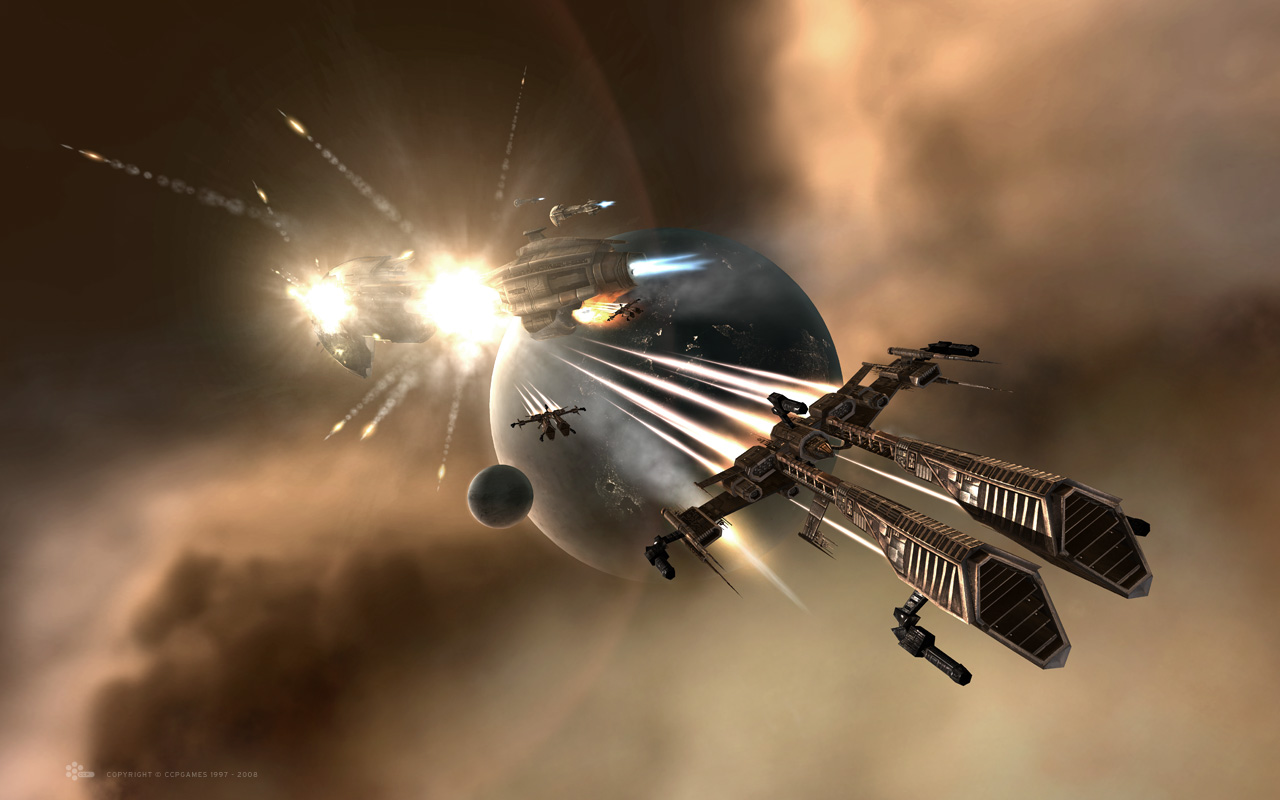
It’s easy to forget that before “World of Warcraft,” MMO games were among the most daunting and complex of all gaming genres. Of those games, the crown jewel may be “EVE Online.”

“EVE” would be complicated enough on its own as most of the gameplay revolves around navigating a series of really detailed menus and performing hundreds of hours of mundane tasks, but the game’s hardcore players have turned the title into a whole different animal. Trying to jump into “EVE” as a newbie will thrust you into a universe of politics, economics, and caste systems that are as challenging to learn and overcome as any in the real world

“EVE” is not for everyone, and anybody sane will most likely give up on it before even the 20 hour mark. Press on though, and you may find every other game to be to suddenly be too simple.

Dwarf Fortress

Dffortressmode1

A theme with the other games on this list is that they eventually reward you for all of your efforts with a one of a kind experience. This is not the case with “Dwarf Fortress.”

Oh sure, somewhere beneath its text based graphics, 90% based on menus gameplay, and learning curve so steep that a publisher of technical manuals created a 238 page illustrated guide that just shows how to get started, is probably a game that provides moments unlike any other, but good luck ever sticking with it long enough to even find the surface to scratch.

“Dwarf Fortress” may be a game about constructing the ultimate stronghold for your gang of dwarves, but its real purpose is to crush souls and make Mensa members feel inadequate. The real kicker? It’s main mode is essentially unwinnable.

The New “Among the Sleep” Demo is Sure to Make Even Grown Men as Scared as a Baby

ats_screen03

If you haven’t been following it, “Among the Sleep” is a unique upcoming indie project that looks to take horror away from its recent “action game with some jump moments” state, and back to the realm of true terror by placing you in the shoes of the most unlikely horror hero of all.

An infant.

That’s right. In “Among the Sleep” you play through the eyes of a baby as he is awoken during a dark and stormy night and sets off in search of his parents, with nothing but his teddy bear as company. Without giving too much away, it turns out this is no normal night, and in fact some serious terror is lurking all throughout the house.

It’s a unique title to be sure, and to help people get a grasp exactly how terrifying it can be, developer Krillbite Studio has uploaded a demo of the game to the project’s Kickstarter page, for Mac, Linux, and PC users.

So how is it? Pants wettingly terrifying, since you ask.

Even in its clearly rough early state, the game does a great job of making you feel truly helpless, and of showing the world through a baby’s eyes (for example, writing is just scribble and jumbled letters). Scares can come in the form of normal things like lightning strikes, bizarre noises, and darkened hallways, but as the demo progresses, you’ll start seeing some truly freaky stuff that would horrify anyone.

There’s almost sure to be a moment during this demo when you’ll find yourself ducking under a table out of fright  until everything is okay, just like a baby would. It’s an effect accomplished through some truly incredible atmospheric design, and while it remains to be seen if “Among the Sleep” has the gameplay legs to be worth an entire adventure, the demo is a must play for anyone with the courage, and is sure to put “Among the Sleep” on a lot more gamer’s radars.

« Older posts Newer posts »

© 2026 Fearless Gamer

Theme by Anders NorenUp ↑