Page 42 of 318

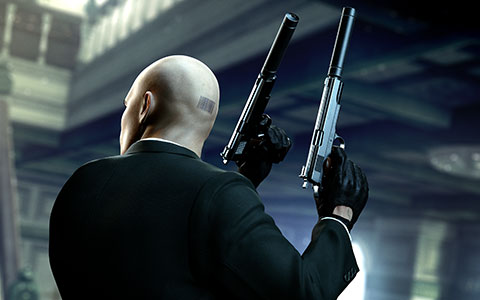
Hitman Absolution’s New Multiplayer Mode Encourages Death by Design

I always love it when a franchise that you wouldn’t think is equipped for multiplayer introduces it in a surprising and innovative way that maintains the ideas and style of the single player experience. Examples would be the always brilliant, always fun Merc vs Spy gameplay from “Splinter Cell: Chaos Theory,” or the brilliant Assassins vs Assassins mode in “Assassins Creed: Brotherhood.” It’s a tough road to go down though, as it requires some real thought and commitment to making the mode work. The other option is to just go the candy bar route of games like “Max Payne 3,” “Uncharted,” or “Bioshock 2” and just tack on a shanty deathmatch mode.

I say candy bar because it’s a route that’s often satisfying, but rarely filling (Snickers non-included).

As a fan of the “Hitman” series, I was thrilled then to read about the new multiplayer mode in “Hitman Absolution,” which puts players in a dungeon master type role by allowing them to design a contract assassination challenge for other players. The creator can take one of the game’s single player levels, and modify it to include the targets (of which they can set the number) and other parameters that may include things like no disguises, or a limited number of kills, or even a rough guideline of certain NPC actions.

Touting their own cleverness, though, the developers have assured everyone that even the most seemingly complex and limiting contracts will have several ways to be completed, even if some are better than others, just as in the main game. Even better is the expansive leaderboard system which keeps track of three different rankings (richest assassin, most skillful assassin, and a running ranking of the most popular contracts).

“Assassin’s Creed” may be the darling silent killer franchise at the moment (and “Assassin’s Creed 3” is looking to do nothing to tarnish that reputation) but the de facto assassin series will always be “Hitman.” It’s encouraging then to see that the flag bearer of the genre is working on creating the definitive multiplayer mode as well (even if it isn’t PvP style).

Between that and the previously announced “Crysis 3” multiplayer mode, it’s also promising that the new trend in even the most established of franchises seems to be thinking outside of the box when it comes to multiplayer expansion, instead of slapping a deathmatch option on said box, and calling it a sequel.

I guess that’s my awkward way of saying, hint, hint Rockstar and “GTA: V.” Hint, hint.

EA Shuts Down PopCap’s Dublin Studio

I love PopCap Games, and I’m not ashamed to admit it.

While some deeply entrenched veteran gamers consider them a mainstream harbinger of doom, the fact is they have produced some of the most purely addictive games of this, or any, generation with titles like the hall of fame “Bejeweled,”Plants vs Zombies,” “Bookworm,” and the glorious “Peggle.” They toe a fine line between “mainstream” (in the dirty word sense) and merely accessible, and their constant goal of gameplay over graphics and fun over flash is inspiring.

Which is why it’s sad to see that they have become the victim of some massive layoffs, as EA (who bought them out for around $750 million last year) announced the shuttering of the team’s Dublin studio. While the move has been long rumored, that’s certainly no condolence for the 96 employees who were laid off due to this move as they join the initial fired employees who lost their jobs when EA took over last year.

EA has been clear on their reason for this move, saying that they are trying to trim down aspects of PopCap that are similar to services they already offer, and the Dublin studio’s efforts apparently did not fit the need of EA in accordance to their plans moving forward. Both EA and PopCap have announced that many of the employees from the shuttered branch will have employment opportunities available at other PopCap locations and at EA operations, which include call center positions.

There’s far too many EA is the evil empire articles out there to still have any effect, and I don’t wish to contribute to them here. I will say this though. You may recall that PopCap gained a reputation early on for offering their games for free trial before purchase to help promote them. Even when they featured their games on Steam, they insisted the free demo still remain an option, as they were that confident in their products, and couldn’t wait to share them with the masses.

It’s just a shame then that such a company that held that philosophy had to fall to something like budget cuts and corporate strategy. Good luck to all of the employees of the former Dublin studio, and to PopCap itself who I hope can recover from this round of bad news and continue to produce at a high level.

Cavanagh vs Killingsworth: This Super Hexagon Ain’t Big Enough

Of all of the concepts in video game history, only one seems to have the unique attribute of being both completely irrelevant, and strangely everlasting.

It’s the concept of high scores.

Long ago (I would say even into the Super Nintendo era) the need and use for high scores in video games as a dominate means of measuring achievement feel to the wayside. In its place came the greater ideas of narrative, exploration, and eventually direct competition, creativity and, of course, unique individual game achievements. In other words, pretty much everything but a rolling tally of numbers is used to judge gamers, and games, by skill and merit.

And yet, even as gaming spreads more and more into the public conscious, the idea of a high score and video games still goes hand and hand. To this day, you still hear movies and other mediums throw out the line “I beat my high score!” or something similar when the story calls for a gaming reference. In a way it’s no surprise. The idea of one set of numbers being greater than another is used in so many other fields to declare a winner that its natural for that same feature to be the defining characteristic of victory for gaming as well in the eyes of many.

Of course, with the explosion of mobile gaming, the idea of a high score is becoming slightly less barbaric than it once was. Those simple app games are re-exploring the concept and, thanks to the global communication devices they often run off of, are also bringing back the idea of the classic arcade concept of communal high score competition. Just like an arcade, there are of course those gamers that shine above all others, and whose names remain such fixtures on the tops of leaderboards that you would think they were programmed there. Also, much like an arcade, every now and then a small group of those superior scorers will engage in a back and forth over the top spots that creates one of the competitive concepts that you see in just about every other field with regularity except for gaming. Genuine, individual player vs individual player rivalry.

Right now on the leaderboards of “Super Hexagon,” this rare moment is occurring. Even better, it’s not two civilians that are engaging, but two heavyweight players. In one corner is Terry Cavanagh. Terry has the unique “Super Hexagon” advantage of not only having programmed “Super Hexagon”, but creating the damn thing in the first place. The game’s challenge of moving a small triangle through a pulsating and vibrant tunnel of constant death is his doing. Actually, allow me a quick sidebar here before we move any further. If you’ve never played it, “Super Hexagon” can be sadistic. Think, “Dark Souls” without the thrill of accomplishment, because there rarely is accomplishment to be found within its impossible confines.

Yet this common idea doesn’t hold for Cavanagh who constantly finds himself atop the leaderboard. He isn’t doing it through any programming advantages either. The man is just that good and, even more important, is obsessed with remaining the best player in the world. He constantly checks in to see if anyone is eyeing the throne, and smites all those who would seek to replace him.

It’s a madness that has worked so far and, were it not for Jason Killingsworth, Mr. Cavanagh may be a man without rival.

Have you never heard of Jason Killingsworth? Well along with being an editor for Edge magazine, he’s also something of a gaming daredevil. His accomplishments include beating every challenge in “Super Meat Boy” (a game designed, more or less, not to be beaten), garnering every achievement in “Spelunky” (which you have to look up, to truly appreciate), and he’s also a strong advocate of unpopular ideas like the 100 hour video game. In an interview with Wired, whose interview broke this story, he puts his motivation best:

“I have near-crippling levels of perfectionism,” Killingsworth says, and a penchant for exquisite challenges. “Most games these days feel like cow-tipping — the only requirement to succeed is to possess at least one working arm,” he says. “I want to spend my gaming hours breaking crazy-eyed, bucking stallions.”

The blindingly fast “Super Hexagon” is his latest stallion, and therefore,  so is the high score of Cavanagh. Their competition hasn’t been so much a sweet science, as it is a stick and move affair. Killingsworth takes a jab, Cavanagh posts a new score moving farther out of reach. It’s the same, again and again. Only recently, has a true counter-strike has been landed as Killingsworth has beaten Cavanagh in the games third highest difficulty by 12 seconds. It’s not total victory, but for a creator who has a “Frankenstein” like obsession with his work, it’s enough to make him sweat and feverishly check the leaderboards each day to make sure Killingsworth doesn’t claim even part of the kingdom for long.

Yet, like all great champions, he is still gracious in defeat as he is quick to praise Killingsworth for accomplishing what few, if any more, ever will. He does this for the same reason he is so adamant about maintaining his spot on the leaderboard. Because he just wants to promote the game he is so proud of.

That, is the biggest reason this one of my favorite gaming stories of the year. Someday someone is going to have to invent a better phrase for it, but until then this is simply old school gaming at its purest. It brings back such glorious concepts of arcade spirit and high score competitions, that aren’t marred by things like cheap tactics, glitch exploitation, or the dreaded pre-pubescent bewildering smack talk that plagues so many other competitive games either. No, somehow in an industry that is becoming more and more obsessed with corporate ideas, lies a high profile back and forth between a game creator who just wants everyone to love his game as much as he does, and a hardcore gamer who welcomes challenges that take no prisoners.

In other competitive fields they refer to events such as this as being for “the love of the game”, or representing “the integrity of the sport”. Video games don’t really have a similar phrase, but the beauty of it is they don’t need one. Because in a simpler time, we just called this gaming. In a more complex age, that’s thankfully all this still is.

Madden cover boy Cam Newton off to a slow start

On the heels of a disastrous 2011 season for Peyton Hillis after he was named the Madden cover boy, the idea of a “Madden Curse” gained some serious traction, as many football fans and hard core gamers couldn’t get enough of the story. Of course the story is absurd in many ways, but many fans and betters can’t help get caught up in the hysteria. Betters are supposed to rely and cold analysis when picking games, and use resources like stats and some sportsbook review options to make the best picks and find the most advantageous betting lines, but stuff like this always seeps into the equation. Which team has momentum? Which team or player is due?

With Peyton Hillis, he was a one-year wonder with the Browns in 2010, and he proved to be a headcase in 2011, and while he was injured, there are plenty of rational explanations for his terrible season apart from a curse.

Yet while some of the concerns about a curse might be irrational, this year we’re seeing Cam Newton struggle. Now he’s a much better player than Peyton Hillis, so if Newton stumbles, the curse chorus will get even louder. Last night Newton had a very tough game against the New York Giants pass rush, and Newton has looked much more human in 2012. Still, people need to keep in mind that Newton is just in his second season, and many quarterbacks suffer a sophomore slump as defenses in the NFL adapt to your strengths and discover your weaknesses. The truly good players can then also adjust and improve their game.

So whether this is a slump or another manifestation of a video game curse, many eyes will be on Cam Newton to see if he can get back to his 2011 performance levels.

Two of BioWare’s Founders Are Leaving the Company

Today Bioware Co-Founders Greg Zeschuk and Ray Muzyka announced that they are leaving the company, and possibly video games in general.

Both have made statements on their departure via their blogs, that basically express their interest in moving on to other ventures. Muzyka provides a vague idea of his interests moving forward saying:

“I believe strongly in the power of free enterprise to enable sustainable change, so my next ‘chapter’ will likely focus on an entirely new industry, something exciting, different and frankly downright scary – investing in and mentoring new entrepreneurs, and more specifically, the field of social/impact investing.”

Zeschuk provides a clearer idea of his life moving forward, as he expresses the usual interest of his desire to spend more time with his family along with the more specific desire to get into the craft beer industry:

“The main project I will be working on is a web-based interview show called The Beer Diaries where I interview notable brewers and showcase their beers. If things go well, I’ll work on other beer-related shows, apps and projects.”

The most telling, and somewhat disheartening, statement provided by either man would belong to Zeschuk who also said:

“I’ve reached an unexpected point in my life where I no longer have the passion that I once did for the company, for the games, and for the challenge of creation.”

Greg Zeschuk and Ray Muzyka both got into the video game industry after graduating medical school at the University of Alberta. They worked on medical based computer programs before that same passion for gaming led them, and co-founder, Augustine Yip, to create their first title “Shattered Steel” for publisher Interplay. From that point they spearheaded a studio that’s game catalogue reads like the upper end of most best video games of all time lists. Bioware has revolutionized Western and PC RPGs with “Baldur’s Gate,” made one of the all time great cult classics in “MDK2,” crafted the greatest “Star Wars” game of all time (and one of the most important games period) in “Knights of the Old Republic,” and just recently have made two of the best series of this generation with “Dragon Age” and “Mass Effect.”

More important than any individual contributions, however, are the greater ideas that Zeschuk and Muzyka promoted with Bioware. Through several generations, they helped run a studio that always advanced the RPG genre with each new entry (and gaming as a whole in most cases) and proved yet again that maintaining artistic integrity and achieving financial success are not mutually exclusive in the business. While the departure of Zeschuk and Mzyka doesn’t mean Bioware will no longer achieve those same goals, it is sad to realize that even such legends in the industry can simply lose their passion and walk away.

Of course, like Neil Young said, “Sometimes it’s better to burn out, than to fade away.” Zeschuk and Muzyka leave behind an undisputed legacy that future generations of developers can only hope to duplicate, but should most certainly learn to appreciate. Here’s hoping them the best in the future.

Also, Greg, I’ll buy a case of Baldur’s Beer, or Icewind Ale should they hit store shelves.

« Older posts Newer posts »

© 2026 Fearless Gamer

Theme by Anders NorenUp ↑