Tag: News (Page 4 of 5)

The 31 Horror Games of October: Part 1

Horror may be gaming’s most effective genre.

While you can put a book down, or tell yourself its just a movie, there is an element of participation involved in games that makes the scary ones that much worse. Even if it is in the virtual sense, you are the one in the game, and the horrors are happening to you.It may have taken a while for developers to truly catch on to the potential of the genre, but ever since there has been a tidal wave of terror that has left many a gamer fumbling their controllers in a cold sweat.

As October rolls around then, and Halloween dawns on us, it is time to celebrate the greatest horror games of all time. I’ve got a list of 31 total, starting here, one for each day of the month. They are loosely ranked, with the main factor being the overall experience.

Although, being absolutely terrifying also doesn’t hurt its standings.

31. Deadly Premonition – Awful graphics, controls, gameplay ideas, acting, and just about every other technical malady you can think of plague this game. But, just like horror movies, not everything has to be perfect for a title to be memorable. There is just something so compelling in the way that “Deadly Premonition” handles itself, as it clumsily (but oddly beautifully) blends horror and black comedy in an open world environment. The game’s story is completely out there, and sucks you in just to see what’s next. It’s almost like the developers intended to make a bad game, but accidentally ended up with something greater than the sum of its parts (much like many a great B-Movie). You’ll either love this game or despise it, but it is impossible to forget, and makes for something every gamer must try even if you hate yourself for doing so.
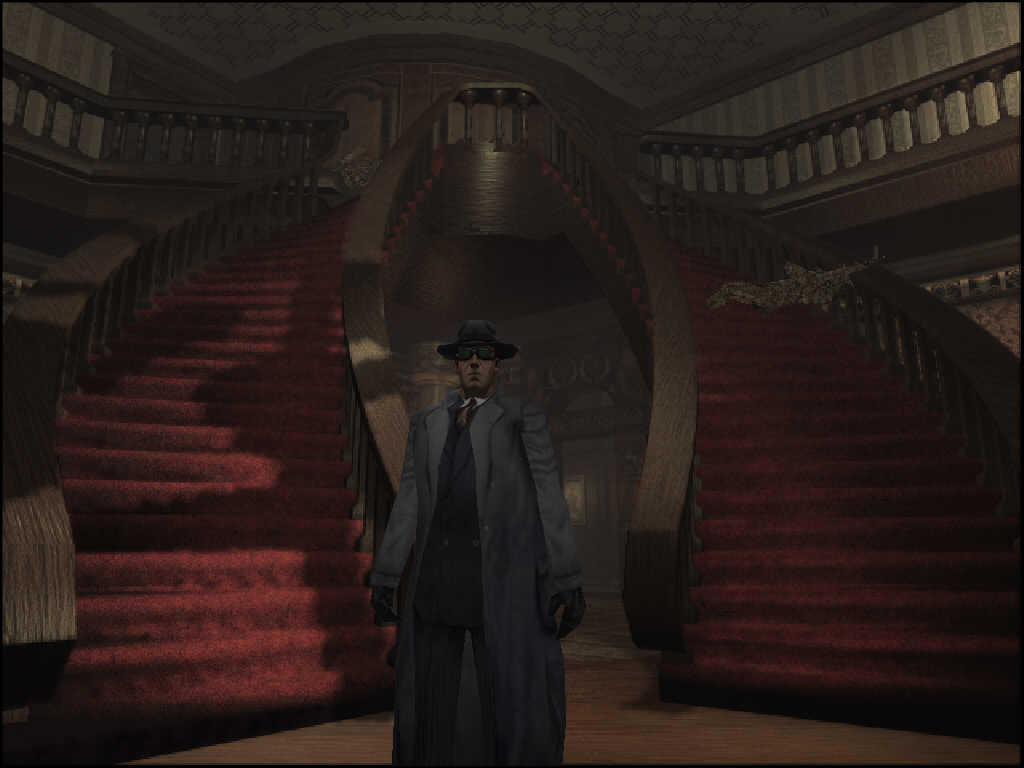
30. Nocturne – In what will be something of a reoccurring theme on this list, “Nocturne” is brimming with flaws. Sporting one of the worst  cameras ever in a video game, and some equally bad controls to match, “Nocturne” is slightly unplayable these days. But if you gut your way through it you will find some of the best horror environments of all time. Carried by the games great story, “Nocturne” comes off like a mix of the “X-Files” and the old Hammer horror films of the 50s. A technical disaster that did so much else right, this is one game that is begging to be revisited.
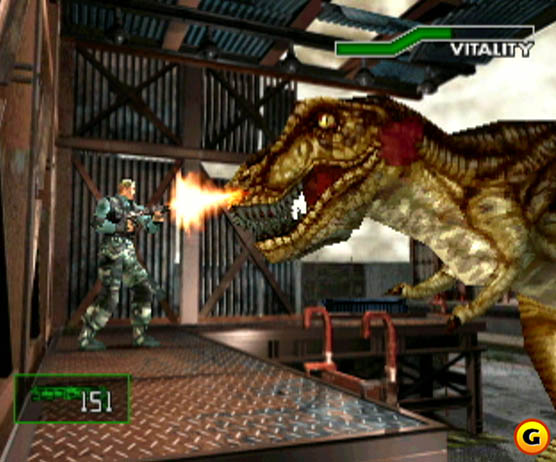
29. Dino Crisis 2 – The first “Dino Crisis” looked and felt a lot like “Resident Evil” with dinosaurs. It was fun, and had moments of genuine creativity, but the series peaked with “Dino Crisis 2.” The survival concept of the first game went almost completely out of the window, and in its place came pure action bliss, as “Dino Crisis 2” became one of the few, and greatest, arcade style horror games of all time. The variety of weapons, enemies, and levels turns the game into one new fist pumping moment after another throughout the, all too brief, runtime. It may not be scary enough to go higher on my list, but it’s fun enough to still warrant playing through to this day, which is not something you can say for a lot of similar games from that era

28. Siren– The Japanese have a good mind for horror, and “Siren” is definitely a pure Japanese horror game. While the game more than liberally borrows from “Silent Hill” in many aspects (especially the story) the look and feel of the game carry an appropriate level of dread. Bonus points are applied for the great “Sightjack” feature that allows you to take over the view of an enemy in order to best avoid them, which is necessary as they can’t be killed in the strict sense. At the end of the day, “Siren” is undeniably a clone of many superior works, but the things it copies are so rarely copied in video games that it still feels fresh.

27. Alone in the Dark – In general, video games do not share the same luxury of fine wines, and tend to age horribly. Long cited as the first survival horror game in the pure sense, “Alone in the Dark” isn’t necessarily unplayable, but its dated gameplay and graphics take much of the original impact away. More than just a textbook video game entry however, there is still a lot of great design decisions to be found in “Alone in the Dark’s” carefully constructed house of scares. Much like an old black and white horror flick, what this game has lost in fright, it makes up for with an odd charm and timeless sense of style. It’s impossible to call yourself a horror fan and not give the original “Alone in the Dark” a go.

26.  Rule of Rose – If famed horror director Dario Argento made a horror game, it may look like ‘Rule of Rose.” One of gaming’s few entrants in the psychological horror genre, “Rule of Rose” is a disturbing romp through an abandoned orphanage that features an almost incomprehensible plot that actually makes the entire experience better for the dreamy effect it creates. I’ve rarely played a game that felt so unnerving, and makes you feel as unwelcome. Unfortunately this is another case of bad design ruining the overall game, as “Rule of Rose” puts its full effort into story and style and leaves players to suffer through a general gameplay hell that will make all but the most patient give up in disgust. It still remains too unique to be anything less than noteworthy, though.

25. Slender: The Eight Pages – I almost feel bad putting such a new and simple title above something like “Alone  in the Dark.” However, “Slender” truly is horror design at its most pure. Featuring one enemy, and no combat system, the only thing you can really do in “Slender” is walk and collect the eight pages that are scattered about. But every turn could make you face to face with the Slender Man himself, which could spell your doom, and ensures you will be jumping constantly while playing. Uncompromisingly terrifying, this is minimalist game design at its very best, and with any luck will start a new trend of horror games not trying to rely entirely on action gameplay as a backbone.

Continue reading »

Bring Atlanta’s Magic City Home, With Their New Playstation Theme

Scan the list of available PS3 themes and you will find they come in a surprising number of categories. There’s the generic game promotion, the clever game promotion, the horrific third party design (WARNING: Link leads to Jersey Shore related material), the unique, the awesome, the creepy, the minimalist, and of course, the three wolves howling at a winter moon bro shirt just to name a very few.

However, one of the most prolific is the babes category. Perhaps not surprisingly, there is a large market out there for gamers who want to boot up their Playstations and view a static image of a scantily clad woman who may or may not be an Anime character.

Now, famed purveyor of semi-naked lady themes Konsole Kingz are throwing a new entrant into the dark and dingy ring of babe themes. It provides 8 images of the ladies of the famed Magic City gentlemen’s club in Atlanta, a hot spot for some of the major national and local hip-hop talent. According to Konsole Kingz CEO CJ Peters, the goal of the theme is to:

“…push the envelope in reflecting the modern lifestyle of our consumer but remaining tasteful with the images we choose to produce; and this Magic City PS3 wallpaper is no exception.  The club and their dancers are known all over the world and we’re excited to share a small part of their storied legacy.”

The theme does provide a cheap thrill, makes you feel a little dirty, and has you questioning how you spend your evening, so it does re-create the gentleman’s club experience to an extent. However, since you don’t have to pay an outrageous door fee, get mean mugged by bouncers, feel obligated by a suspicious buffet, or question the integrity of a watered down drink that is priced oddly similarly to a human lap dance, it’s actually a little better than the real deal too.

You can find the Magic City theme in the Playsation Store by searching “Themes and Avatars” and finding it under the “Babes” section. You can also browse Konsole Kingz other theme selections through their website.

Hitman Absolution’s New Multiplayer Mode Encourages Death by Design

I always love it when a franchise that you wouldn’t think is equipped for multiplayer introduces it in a surprising and innovative way that maintains the ideas and style of the single player experience. Examples would be the always brilliant, always fun Merc vs Spy gameplay from “Splinter Cell: Chaos Theory,” or the brilliant Assassins vs Assassins mode in “Assassins Creed: Brotherhood.” It’s a tough road to go down though, as it requires some real thought and commitment to making the mode work. The other option is to just go the candy bar route of games like “Max Payne 3,” “Uncharted,” or “Bioshock 2” and just tack on a shanty deathmatch mode.

I say candy bar because it’s a route that’s often satisfying, but rarely filling (Snickers non-included).

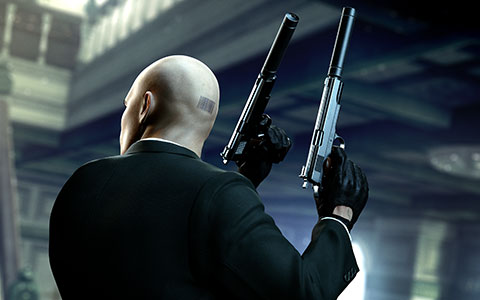
As a fan of the “Hitman” series, I was thrilled then to read about the new multiplayer mode in “Hitman Absolution,” which puts players in a dungeon master type role by allowing them to design a contract assassination challenge for other players. The creator can take one of the game’s single player levels, and modify it to include the targets (of which they can set the number) and other parameters that may include things like no disguises, or a limited number of kills, or even a rough guideline of certain NPC actions.

Touting their own cleverness, though, the developers have assured everyone that even the most seemingly complex and limiting contracts will have several ways to be completed, even if some are better than others, just as in the main game. Even better is the expansive leaderboard system which keeps track of three different rankings (richest assassin, most skillful assassin, and a running ranking of the most popular contracts).

“Assassin’s Creed” may be the darling silent killer franchise at the moment (and “Assassin’s Creed 3” is looking to do nothing to tarnish that reputation) but the de facto assassin series will always be “Hitman.” It’s encouraging then to see that the flag bearer of the genre is working on creating the definitive multiplayer mode as well (even if it isn’t PvP style).

Between that and the previously announced “Crysis 3” multiplayer mode, it’s also promising that the new trend in even the most established of franchises seems to be thinking outside of the box when it comes to multiplayer expansion, instead of slapping a deathmatch option on said box, and calling it a sequel.

I guess that’s my awkward way of saying, hint, hint Rockstar and “GTA: V.” Hint, hint.

EA Shuts Down PopCap’s Dublin Studio

I love PopCap Games, and I’m not ashamed to admit it.

While some deeply entrenched veteran gamers consider them a mainstream harbinger of doom, the fact is they have produced some of the most purely addictive games of this, or any, generation with titles like the hall of fame “Bejeweled,”Plants vs Zombies,” “Bookworm,” and the glorious “Peggle.” They toe a fine line between “mainstream” (in the dirty word sense) and merely accessible, and their constant goal of gameplay over graphics and fun over flash is inspiring.

Which is why it’s sad to see that they have become the victim of some massive layoffs, as EA (who bought them out for around $750 million last year) announced the shuttering of the team’s Dublin studio. While the move has been long rumored, that’s certainly no condolence for the 96 employees who were laid off due to this move as they join the initial fired employees who lost their jobs when EA took over last year.

EA has been clear on their reason for this move, saying that they are trying to trim down aspects of PopCap that are similar to services they already offer, and the Dublin studio’s efforts apparently did not fit the need of EA in accordance to their plans moving forward. Both EA and PopCap have announced that many of the employees from the shuttered branch will have employment opportunities available at other PopCap locations and at EA operations, which include call center positions.

There’s far too many EA is the evil empire articles out there to still have any effect, and I don’t wish to contribute to them here. I will say this though. You may recall that PopCap gained a reputation early on for offering their games for free trial before purchase to help promote them. Even when they featured their games on Steam, they insisted the free demo still remain an option, as they were that confident in their products, and couldn’t wait to share them with the masses.

It’s just a shame then that such a company that held that philosophy had to fall to something like budget cuts and corporate strategy. Good luck to all of the employees of the former Dublin studio, and to PopCap itself who I hope can recover from this round of bad news and continue to produce at a high level.

Cavanagh vs Killingsworth: This Super Hexagon Ain’t Big Enough

Of all of the concepts in video game history, only one seems to have the unique attribute of being both completely irrelevant, and strangely everlasting.

It’s the concept of high scores.

Long ago (I would say even into the Super Nintendo era) the need and use for high scores in video games as a dominate means of measuring achievement feel to the wayside. In its place came the greater ideas of narrative, exploration, and eventually direct competition, creativity and, of course, unique individual game achievements. In other words, pretty much everything but a rolling tally of numbers is used to judge gamers, and games, by skill and merit.

And yet, even as gaming spreads more and more into the public conscious, the idea of a high score and video games still goes hand and hand. To this day, you still hear movies and other mediums throw out the line “I beat my high score!” or something similar when the story calls for a gaming reference. In a way it’s no surprise. The idea of one set of numbers being greater than another is used in so many other fields to declare a winner that its natural for that same feature to be the defining characteristic of victory for gaming as well in the eyes of many.

Of course, with the explosion of mobile gaming, the idea of a high score is becoming slightly less barbaric than it once was. Those simple app games are re-exploring the concept and, thanks to the global communication devices they often run off of, are also bringing back the idea of the classic arcade concept of communal high score competition. Just like an arcade, there are of course those gamers that shine above all others, and whose names remain such fixtures on the tops of leaderboards that you would think they were programmed there. Also, much like an arcade, every now and then a small group of those superior scorers will engage in a back and forth over the top spots that creates one of the competitive concepts that you see in just about every other field with regularity except for gaming. Genuine, individual player vs individual player rivalry.

Right now on the leaderboards of “Super Hexagon,” this rare moment is occurring. Even better, it’s not two civilians that are engaging, but two heavyweight players. In one corner is Terry Cavanagh. Terry has the unique “Super Hexagon” advantage of not only having programmed “Super Hexagon”, but creating the damn thing in the first place. The game’s challenge of moving a small triangle through a pulsating and vibrant tunnel of constant death is his doing. Actually, allow me a quick sidebar here before we move any further. If you’ve never played it, “Super Hexagon” can be sadistic. Think, “Dark Souls” without the thrill of accomplishment, because there rarely is accomplishment to be found within its impossible confines.

Yet this common idea doesn’t hold for Cavanagh who constantly finds himself atop the leaderboard. He isn’t doing it through any programming advantages either. The man is just that good and, even more important, is obsessed with remaining the best player in the world. He constantly checks in to see if anyone is eyeing the throne, and smites all those who would seek to replace him.

It’s a madness that has worked so far and, were it not for Jason Killingsworth, Mr. Cavanagh may be a man without rival.

Have you never heard of Jason Killingsworth? Well along with being an editor for Edge magazine, he’s also something of a gaming daredevil. His accomplishments include beating every challenge in “Super Meat Boy” (a game designed, more or less, not to be beaten), garnering every achievement in “Spelunky” (which you have to look up, to truly appreciate), and he’s also a strong advocate of unpopular ideas like the 100 hour video game. In an interview with Wired, whose interview broke this story, he puts his motivation best:

“I have near-crippling levels of perfectionism,” Killingsworth says, and a penchant for exquisite challenges. “Most games these days feel like cow-tipping — the only requirement to succeed is to possess at least one working arm,” he says. “I want to spend my gaming hours breaking crazy-eyed, bucking stallions.”

The blindingly fast “Super Hexagon” is his latest stallion, and therefore,  so is the high score of Cavanagh. Their competition hasn’t been so much a sweet science, as it is a stick and move affair. Killingsworth takes a jab, Cavanagh posts a new score moving farther out of reach. It’s the same, again and again. Only recently, has a true counter-strike has been landed as Killingsworth has beaten Cavanagh in the games third highest difficulty by 12 seconds. It’s not total victory, but for a creator who has a “Frankenstein” like obsession with his work, it’s enough to make him sweat and feverishly check the leaderboards each day to make sure Killingsworth doesn’t claim even part of the kingdom for long.

Yet, like all great champions, he is still gracious in defeat as he is quick to praise Killingsworth for accomplishing what few, if any more, ever will. He does this for the same reason he is so adamant about maintaining his spot on the leaderboard. Because he just wants to promote the game he is so proud of.

That, is the biggest reason this one of my favorite gaming stories of the year. Someday someone is going to have to invent a better phrase for it, but until then this is simply old school gaming at its purest. It brings back such glorious concepts of arcade spirit and high score competitions, that aren’t marred by things like cheap tactics, glitch exploitation, or the dreaded pre-pubescent bewildering smack talk that plagues so many other competitive games either. No, somehow in an industry that is becoming more and more obsessed with corporate ideas, lies a high profile back and forth between a game creator who just wants everyone to love his game as much as he does, and a hardcore gamer who welcomes challenges that take no prisoners.

In other competitive fields they refer to events such as this as being for “the love of the game”, or representing “the integrity of the sport”. Video games don’t really have a similar phrase, but the beauty of it is they don’t need one. Because in a simpler time, we just called this gaming. In a more complex age, that’s thankfully all this still is.

« Older posts Newer posts »

© 2026 Fearless Gamer

Theme by Anders NorenUp ↑