Category: Editorial (Page 6 of 34)

The Poker Player Who Retired at 20

1
Image source: Wikipedia

They say the biggest mistake that most people make with regards to their retirement is that they do not plan for it, but that is clearly not the case with Canadian Mike “Timex” MacDonald, who, at 18 years of age—still too young to even play in most U.S. casinos—is retiring from the world of professional poker.

McDonald is a proven talent in the world of professional poker. “Timex” has earned himself two money finishes and a final table at the World Series of Poker, and would achieve the same result on the World Poker Tour. While on the European Poker Tour, Mike snagged himself three final tables and has finished in the money seven times. As of 2011, his total live tournament winnings exceed $3,600,000.

But the time has come to move on. Regarding the retirement, Mike offered the following comments on his Cardrunners blog:

Poker came along and fairly quickly I was successful at it, and not too long after that I started to get good. I went to university for a year and really put many other aspects of my life to the side. I went from playing sports 4-10 times a week to maybe once or twice, didn’t really participate in any extracurricular activities, focused a lot less on school but in spite of all that I think it was most definitely the right thing to do. I had a fantastic opportunity to do something I enjoy, make lots of money and finally have an opportunity to truly excel at something.

After I turned 18 and could play the live circuit I did that, and I really enjoyed the free time, the opportunity to meet lots of people with the same common interest, the ability to see lots of new places. I started to get really good and fortunately after only ~5 months on the live circuit I won EPT Dortmund. I got to the point where I thought I was better than pretty much everyone and along with the success I had in tournaments I was doing extremely well in HU/shorthanded cash. After the 7 figure score I lost a fair bit of motivation to grind and went through a phase of playing very little poker. I was kind of at the point where I had made enough money that unless a couple really bad things happened, I had set myself up to be in a comfortable position for life. At this point I had more or less realized I would never be the best poker player since there were plenty of people who were smarter than me, had bigger egos than me and just legitimately enjoyed playing and learning poker more than I did. I still was very good but probably ~2 years ago is when I came to terms with the fact I would never be viewed as the #1 poker player in the world.

So anyways… at this point I arrive at the “where do I go from here” question that I asked in the title. I honestly don’t know but I think at least setting myself up to be in positions to find things I’m passionate about is probably the right approach. I recently began talking with a friend about a business idea that we’d consider starting in the next few years and although I was originally just thinking my involvement would be limited to investment, I’m now realizing that this is the type of thing that could highly interest me. I think returning to school and trying out a super wide variety of courses, learning new things, meeting new people and just beginning to live a life that is more in touch with everyone else seems aligned with my interests. I currently am trying to get in touch with the University of Waterloo about possibly taking some classes this summer, and depending on how that goes may return to Waterloo or another university in the fall.

It’s hard to imagine how someone could get bored with winning millions of dollars, but if poker has consumed most of your free time from an early age, it’s relatively easy to see why spending some quality time at school, and with friends, might need to take precedence.

What do you think? Will Mike make a triumphant return to the world of poker, or is he truly done forever? For a hard-core gamer of any variety, is the game ever truly over?

Simon is a writer and content specialist who is addicted to being on the front page of anything. A graduate of Dalhousie University, he specializes in using the em dash too often. Currently, Simon rests his typing hands in Vancouver, Canada. Check out a recent example of his work here.

On So Many Levels, “Far Cry 3: Blood Dragon” Is Brilliant

I’ve never played “Far Cry 3: Blood Dragon.” I’ve never spoken to anyone who has, I’ve never been in the same vicinity of a playable version of it, and my only real exposure to the game is the spectacular 15 minute demo IGN put out recently.

Yet I can tell you without shame in my heart, or doubt in my words that I love “Far Cry 3: Blood Dragon.” Truly love it.

While I realized this the moment that I heard “Long Tall Sally” blasting from a helicopter stereo in a glorious tribute to the greatest sci-fi action movie of all time (“Predator”), it’s not even the game’s love of everything sci-fi 80s that stirs these emotions in me. Rather it’s something deeper, more real.

It’s because “Blood Dragon” reminds me that add-on content doesn’t have to be a bad thing, but can actually be fun.

Too often downloadable content is seen as a necessity, or worse a money grab. “Blood Dragon” is the antithesis of that idea. It was the brainchild of a group of developers who saw the opportunity to release the necessary DLC content for “Far Cry 3” as something more than an obligation to bang out some new items, or a side story in the same environment, but instead they took the chance to take all of the original game’s well developed mechanics, and use them as the foundation of something that would not only be creatively satisfying, but that could be as enjoyable to make as it would be enjoyable to play.

In this case it just happened to be a tribute to the world of over the top 80s video games, science fiction, and cartoons. Every aspect of the game is dipped deep into the well of 80s nostalgia, as the cutscense are straight out of an 80’s NES game, there’s a VCR filter over most of the proceedings, and the amount of film references is nerdgasmic. Seriously, if you took a sip of watered down light beer for every “Terminator” reference in the demo, you’d die of alcohol poisoning three minutes in. It’s like the proper video game adaptation of so many franchises we never got, all rolled into one.

But again this isn’t about the content of “Blood Dragon” specifically. It’s about how all other developers need to take notice of “Blood Dragon,” and remind themselves that the moment they feel bored doing DLC, they are probably doing it wrong. Before I saw “Blood Dragon” I honestly never considered that DLC could be a good thing for gaming, but just like “Bioshock Infinite” did for sequels, “Blood Dragon” shows the benefit of preserving the mechanics of a great game, but changing everything else to produce something that doesn’t give you more of what came before, but something more original that reminds you why you loved that game in the first place.

So while the neon infused hyper retro world of “Blood Dragon” should be enough to get anyone to play it (especially as you don’t even need “Far Cry 3” to do so,  making it more of a standalone add-on), the real reason you should pick it up when it is released on May 1st is to show developers that gamers are tired of downloads that just put armor on horses, and instead crave expansions that actually expand and explore the possibilities of a franchise.

2012 Year End Game Review: Matt Byrd

2012 in gaming isn’t a year that is easy to sum up with hyperbole, or one sweeping statement.

It was far from the greatest year in gaming (very, very far), but even still, when I was compiling this list, I had to make some heartbreaking cuts, and felt I was disrespecting some very good games. For every cheap money snatching blockbuster we got this year, we were also gifted with some genuine surprises and accomplished franchise extensions (many of which make up this list). The end result of one step forward and one step back for an entire 12-month period may not have moved gaming ahead, but the constant motion made choosing the best of the year a dizzying experience.

Somehow, though, I was finally able to narrow it down to 10 games that I feel comfortable saying are the best of 2012.

10. Kingdoms of Amalur: Reckoning

On the surface, it looks like all there is to “Kingdoms of Amalur” is a standard RPG coat of paint and a souvenir of the high profile closure of “38 Studios.” It’s not the type of game that makes its first impression with its looks, but rather its personality. The game’s speedy free flowing combat system never ceases to be entertaining throughout the very long adventure “Amalur” provides.

An all-star team of developers and outside talent (fantasy great RA Salvatore penned the story) may have been behind “Amalur,” but nothing feels old hat about the game, and it instead comes across as something closer to a fresh faced group of young talent, with heads full of new ideas creating something against the grain. It’s one of the more surprising, and certainly among the most pure fun, releases this year.

9. Xenoblade: Chronicles

If “Amalur” looks standard and done before on the surface, then “Xenoblade” is practically a fossil upon first viewing. It’s a member of the dying JRPG genre, and was featured on the outdated Nintendo Wii, which would normally spell either doom or obscurity at best. Yet after a wave of hype from the Japanese market, and several thousand petition signatures later, audiences everywhere were greeted by something that felt like meeting an old friend, and finding out that you have just as much fun with each other as you used to.

“Xenoblade” pays tribute to all of the great JRPG conventions that shaped it, but it just as carefully takes note of all the things that made those game’s grow stale as well, and manages to mold new forms for them so you are left with a game that somehow makes you nostalgic for things you never knew before. Your party becomes your family thanks to a great relationship system, and the character building and combat mechanics keep things fresh as you explore one of the more unique worlds available for the genre all in pursuit of finishing an equally gripping story. The era of JRPGs may be over, but “Xenoblade” reminds us why it had a dynasty in the first place.

8. Sound Shapes

I love new, bold ideas in gaming, and “Sound Shapes” may have been among the newest and boldest this year. It has nothing to do with its basic gameplay either, as “Shapes” traditional 2D side scrolling system is fairly ho-hum. Much like a new “Mario” release though, the real draw doesn’t lie in the mechanics, but rather the design. “Sound Shapes” employs a minimalist graphic style that is charming, but only serves to give substance to the soundtrack that defines the experience. Several different musical artists contributed to the music (and the design) of the levels, and as a result we are provided one of the first games since the brilliant “Rez” that feels like an organic and physical product of the soundtrack. It’s more of an interactive soundtrack than a fully loaded video game, but it’s artistic value is unquestionable, and I wouldn’t want to know the person who couldn’t have fun with it.

Continue reading »

Why I’ve Come to Bury “Hitman” and Not the Dead

“Man’s mind, once stretched by a new idea, never regains its original dimensions.”

-Oliver Wendell Holmes Sr. (physician, poet, professor, lecturer, and author)

I truly, truly hope that the above quote is correct because this week in video games we saw a case of a dangerous old way of thinking and a potentially new idea of thinking that if carried over to other projects, and taken in as a new idea, will stretch the limits of what we once believed to be standard, or even possible.

What I mean is in reference to two recent games. One being “Hitman: Absolution” and the other being “The Walking Dead: Episode 5”. Specifically I’m talking about the plots of those games.

Ironically whereas “Hitman” is a game ideally about subtlety, and the art of skill, it’s story has all of the approach and delivery of a blunt hammer to the face delivered by a laughing lunatic. On the other hand, a game like “The Walking Dead” (which often asks the player to smash something in the head with a blunt object) delivers a tale so refined that we must now be careful how we speak of other game’s stories while praising them so we don’t accidentally lump them in the same league with “The Walking Dead” and therefore lose perspective.

“Hitman” is a dangerous game, and I’m not talking about the controversy surrounding the sexy nun enemies, or the general violence of the title. Instead it’s a dangerous game because of its disgusting and obvious story and stroytelling that,despite a couple of here and there moments of quality dialogue, fails to inspire a moment of emotional reaction, whatever that emotion may be . Whereas previous games in series wisely shunned a grand plot in favor of environment and mood as the larger themes, “Absolution” tries to go another route by making its presentation more of a high production, low grade movie. It’s every effort in that respect is so insultingly awful, it is the first game that should have not received the traditional M rating, but rather IM for “immature”.

Didn’t think that was funny? Well now you know how I feel as I tried to suffer through some of the most horrid attempts at sexual references, characters, plot, and of course comedy that have ever graced video games. It’s not even the content I’m against, but instead the delivery. It aims for Guy Ritchie, Robert Rodriguez, and Quentin Tarantino, and instead ends up with an effort more in line with the works of Roger Corman. The only difference was Corman’s schlock knew it was bad and had a sense of style about it, whereas “Hitman: Absolution” seems either unaware of how bad its bad really is, or otherwise doesn’t give a damn and couldn’t be bothered to make what’s there work.

“The Walking Dead” on the other hand? Don’t be surprised if the fifth and final episode in the game’s first season just won the series overall game of the year honors, as its use of characters and plot, and more importantly the player’s involvement in those aspects, is nothing short of revolutionary. The game works off of the same promise of “Mass Effect” or a TV show like “The Wire” where all the pieces supposedly matter, and what you do in the end will be just a reflection of the steps you took to get there.

Unlike “Mass Effect” though, but much like “The Wire”, “The Walking Dead” achieves this as suddenly your choices do come to bear upon you as you now are faced with the prospect of facing the tough moments that defined your journey in a fresh light, and only in the end when you see the ramifications of them are you given the gift of hindsight that allows you to regret, smile upon, and always question your choices, as the end results, and your reactions to them, give you something that few games ever have, and that is a better sense of who you are, and the person you’d maybe rather try to be.

Does a game like “Hitman” have to do the same? Well it would be nice, but that’s not the point. The point is that a title like that handles its story with a dangerous indifference can no longer be accepted. This is not the NES where a brief kidnapping of your girlfriend by some thugs leads to all the motivation you need to reach a single frame resolution and expect satisfaction. You don’t have to have a masterpiece story, but don’t try to pass an entire adventure that is framed by the mentality of the average thirteen year old boy, and done with all of the effort exhibited by the average two year old boy, and honestly tell yourself it is the best you can do without expecting to receive both the mixed reviews and mainstream public backlash you are getting now.

And if you do decide to be dumb and lazy in the same week, whatever you do don’t release that high profile game at the same time as a title that provides a blueprint for the future of the medium and expect to save face in the minds of either your peers, your critics, or your fans

That, and I’m sure the creators of “Hitman: Absolution” can understand this, would just be silly.

The “Halo 4” Effect: Video Game Franchises that Need New Developers

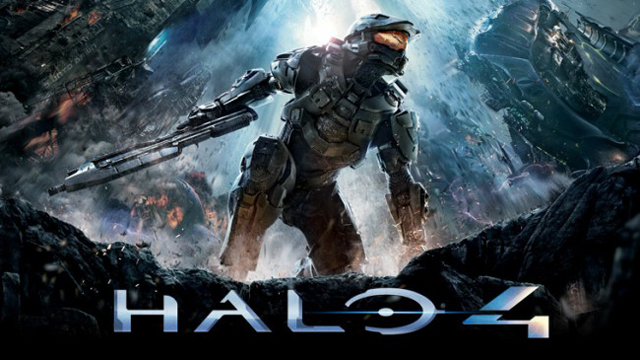
While we’ll have to wait for the initial sales figures, considering how much of a critical hit it has been already, “Halo 4” is looking to become another runaway successes for the famous franchise. Having now played it, I’m thrilled at how the game truly does invoke that feeling of the original titles while not coming across as the cash-in of a well established formula that it so easily could have been. While it’s not quite so simple, we can thank this in large part to the efforts of the series new developer, 343 Industries, who have admirably taken over from the great Bungie.

When I first heard that there was to be a “Halo” game not made by Bungie, I got worried. Now that I step away from it though, I see that it really was the only way that “Halo” was ever really going to flourish again. In fact, the more I think about it, if we’re being honest, there are a lot of classic franchises that have gone stagnant and could use a fresh start courtesy of a new developer. Here’s five of the biggest examples.

Castlevania

The “Castlevania” series was forever altered with the release of “Castlevania: Symphony of the Night”. Gone were the days of the incredibly challenging and linear, classic 2D side scroller, and in came a new “Castlevania” game that emphasized exploration and advancement, similar to the “Metroid” series (coining the term “Metroidvania”). It was such a success in nearly every respect that it changed the outlook and direction of the series for years to come.

That’s not necessarily a bad thing, but the problem is that was way back in 1997, and the series entries ever since have mostly fallen into the realm of knock offs of “Symphony of the Night” or misguided 3D action romps that are at best average, and at worst “Castlevania 64”. As all time great a developer as Konami is, they don’t seem able or willing to make a truly noteworthy entrant to the franchise anymore. It’s just impossible to believe that with the series rich timeline and incredible gothic atmosphere there isn’t a significant amount of fuel left in the tank. Whether it be a glorious and long overdue return to the series roots, or something else entirely, it’s time that one of the greatest series of all time reminded everyone why it is just that.

Who should develop: From Software, the makers of “Demon’s Souls” and “Dark Souls”. I salivate at the thought honestly, as both “Demon’s Souls” and “Dark Souls” feel like the direction the “Castlevania” series should have gone in long ago. They feature larger than life bosses, a variety of spooky enemies, and a “make you regret that you can’t stop coming back” level of difficulty. The series would fit the developer like a glove.

James Bond

The James Bond franchise has seen more developers than the role itself has actors, which may help to explain why we still haven’t gotten a significant game from 007 and crew since the legendary “Goldeneye”.

That’s not to say that every entry has been as bad as the recent “007 Legends”, some like “Blood Stone” and “Everything or Nothing” are actually decent, but rather that the it is in dire need of a rejuvenation that no developer has been able to conjure since Rare. Even when they are not great, when we are treated to a Bond movie every 4 years or so, it always feels like an event, and consistently entertains in one way or another. Considering the wealth of material that the James Bond franchise has, and how much of that can easily translate to games, there is no reason that a competent developer shouldn’t be able to produce that same effect for Bond video games.

Who should develop: There’s a ton of candidates I would love to see take a stab at this, but the one that keeps coming to mind is Remedy (“Max Payne”, “Alan Wake”). They’re a developer that exceeds at creating atmosphere in their games, and when making a good Bond game, your first job is to perfectly capture that iconic James Bond atmosphere, without messing up the gameplay too bad. They’re not a huge developer, exactly, but the impossible level of polish and charm they put in their titles would be very welcome for a Bond game.

Star Fox

At times the “Star Fox” series feels like the Buffalo Bills of the early 90’s. Always so close, and never quite there. The original “Star Fox” was revolutionary for its graphical style, while 1997’s “Star Fox 64” had everyone believe that Nintendo had the next great franchise on their hands. From there, though, 2002’s head scratching “Star Fox Adventures” threatened to take the series into an ill-advised and unwanted new action-adventure direction, while every other release has been either a rehash or re-make of the originals, which in all fairness have been good enough to remind us of the series potential, but not great enough to put it over the top.

It’s time then for some new blood that can realize that the lack of games in the rail shooter genre, and the name power “Starfox” still has, and make it all come together for a glorious return to form. The last couple of “Star Fox” installments have produced quality with little to no effort, so it would be interesting to see what the result of an honest new full effort push would be.

Who should develop: This one is tough, but I’ll go with Ubisoft Montpellier. The development team behind the brilliant “Rayman Origins” can pull off that difficult mix of cartoon looks and intense gameplay that “Starfox” needs to succeed.

Silent Hill

Recently I called “Silent Hill” 2 the greatest horror game of all time. However, when I speak of “Silent Hill” in revered tones, I’m only talking about games 1-4 where Konami was handling development duties.

Ever since then, a few different developers have attempted to re-imagine the franchise and, with only a few very specific successes as exceptions, have all failed in providing any of the quality of the originals. “Silent Hill” was originally defined by its dread filled atmosphere and psychologically challenging scares. In shying away from an action first mentality, it provided a gaming experience that you almost regretted playing, but couldn’t help but be captivated by. The mystique and intrigue the series maintains is as thick as the fog that made the town itself famous, and there is still a lot it has to contribute in the right hands.

Who should develop: There were talks recently of Hideo Kojima taking over the series (which might actually happen), and while that would be fun, while I’m dreaming I’ve got to go with Frictional Games, the developers of “Amnesia: The Dark Descent” and the “Penumbra” series. They’ve been quietly making revolutionary and truly terrifying titles for years now, and a shot at more mainstream, big time success with the next “Silent Hill” game would be incredible.

The WWE Series

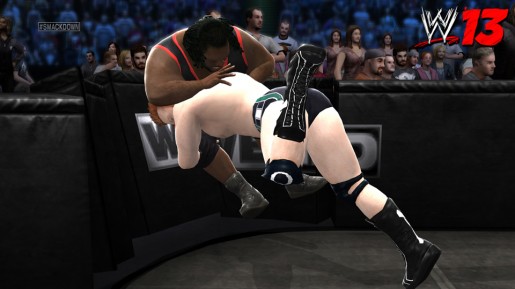
Along with titles like “Goldeneye” and “Mario Kart 64”, wrestling titles such as “WWF No Mercy” helped to make the N64 the system for multiplayer gaming. Of course that was in the heyday of wrestling, and of developer AKI who had a great feel for how to make a wrestling title sing with its gameplay. Since then the series has been passed off to Yuke’s, and while 2003’s “Smackdown: Here Comes the Pain” is one of the best wrestling titles ever, even the most hardcore of wrestling fans have been left feeling cheated by their most recent offerings.

Much like the “Madden” series the complacency of recent WWE titles has removed a real sense of urgency from the games that have taken the competitive spirit a title like that needs to thrive. Respectable attempts to keep the series fresh have been made, but attempt doesn’t mean success, and Yuke’s is sadly failing, even if their intentions are for the best. This game needs a new story mode, a new engine, and a fresh perspective. In short, a complete overhaul.

Who should develop: It’d be fun to see AKI, now Syn Sophia, do it, we don’t know how much of their team from the original is still in tact, plus this is about fresh starts. Instead, why not Team Ninja? The “Dead or Alive” fighting series has always been over the top and incredibly fluid with a variety of unique personalities, which are a few of the most important elements you need for a good wrestling game. Not to mention a Team Ninja developed WWE game would be original to say the least.

« Older posts Newer posts »

© 2026 Fearless Gamer

Theme by Anders NorenUp ↑