Tag: Video Game Lists (Page 2 of 3)

Five Video Games that Need Sequels

LL Cool J warned us all to not call it a comeback, but he never said to not ask for one.

And in the world of video games, sometimes a comeback is just what’s needed. Even in a gaming world where franchise attempts spawn from even the most unremarkable of titles, some games never get the second (or third, or fourth, or fifth) chance they richly deserved. It’s a shame to, as I can think of at least five titles that deserve a sequel.

S.W.A.T.

While technically predating it, the “S.W.A.T.” series is a tactical team based FPS that bears a strong resemblance to “Rainbow Six.” The difference of course being that “Rainbow Six” has you playing a squad of elite globe-trotting operatives, while “S.W.A.T.” has you playing as…well a S.W.A.T. team.

You may think that would be a step down, but the key difference lies in the mission design, as some truly creative scenarios and missions were crafted for this series that were beyond the usual international terrorism intrigue. A great example is a mission in “S.W.A.T. 4” where you have to make your way into a suburban house where a deranged serial killer lives with his mother. Everything looks normal, until you make your way into the basement which doubles as a twisted den of horror. It, along with the well implemented preference towards non-violent solutions when possible, represents what this series does so well even over similar titles.

This license is as cold as it comes, and not a whisper of the series continuing exists anywhere, which is unfortunate as there’s still a lot of potential here.

Jade Empire

In 2003 Bioware stopped the video game presses with their release of “Star Wars: Knights of the Old Republic.” While a watered down version of their earlier PC games in many respects, “KOTOR” blew away nearly everyone that played it, and would change gaming by popularizing the idea of good and bad choices.

For their next big release, Bioware planned on taking that same mechanic, and applying it to a world of their own based heavily on Chinese mythology. “Jade Empire” was the result of that creation, and its seamless blend of ancient China design with just enough mythological elements mixed in, resulted in a game world with few creative peers. There was also a fun, if very simple, combat system based around the use of several martial arts, combined with magic attacks, that helped tie the game together.

Truthfully “Jade Empire” had a lot of flaws, but the groundwork was there for something truly great. It’d be incredible if Bioware would take another stab at getting it all to come together, as by all rights this should have been a franchise.

Hunter: The Reckoning

Okay, so this game did get a sequel, but that’s not my point.

My point is that the horror genre is unfairly shoehorned into only a couple of gameplay ideas, and “Hunter: The Reckoning” puts it into the multiplayer action realm where it so rarely gets to venture. You and three friends take the role of some classic horror movie charchter archetypes and fight your way through a gothic horror world filled with wolves, vampires, zombies, and even giant evil teddy bears and Santa Clauses. No horror stone is left unturned, and getting to shoot and slash your way through it with three friends is an experience not found in many games.

Whether as a retail release or downloadable title, considering the brave new online world we live in, now is the time for a new “Hunter” game, and sooner is definitely better.

Stuntman

Here’s another series that got a sequel, but just not enough of them.

Stuntman” for the Playstation 2 was a gem of a racing title that had you play the role of a movie stuntman, as you perform dangerous driving scenes through various films. Due entirely to its trial and error gameplay which required pinpoint actions at a moment’s notice, “Stuntman” was a brutally challenging game that was constantly frustrating, but always rewarding, and exhibited creative uses of its film based concept, including splicing in your stunts into a trailer for the fake movies you were shooting at the end of each level.

Dark Souls” and “Demon’s Souls” proved there is still a market for impossibly difficult games, and with its unique concept and fresh approach to the stagnate driving genre, it would be great if someone could put it all together and make the quality of game the series is capable of.

Crimson Skies: High Road to Revenge

Sometimes you have to admit defeat and move on with your life, but in the case of “Crimson Skies,” I just can’t do that.

I will never, ever understand how this game didn’t get a sequel.  It takes place in an alternate 1930s where America has taken to the skies instead of the road, and gangs of air pirates rule the day (it’s even cooler than it sounds). As famed air pirate Nathan Zachary, you’re on a quest that sees you run amok of every gang in the country, and engage in incredible aerial battles all the while.

From the great graphics, perfectly implemented arcade style controls, variety of awesome planes, weapons, and characters, insanely inventive world, “Indiana Jones” style plot, intense zeppelin fights, gameplay variety, roaring soundtrack, and still fun to this day (and incredibly welcome at the time) Xbox Live multiplayer, “Crimson Skies” did everything right and is still one of my favorite games of all time. There is really nothing quite like it, which is why it has aged so well and remains enjoyable while other games from the era waste away.

How the game never got a sequel is far beyond me, as it must be stuck in some serious licensing hell. It may not break sales records, but even with minimal efforts, a proper “Crimson Skies” sequel would almost be impossible to ruin considering the wealth of material to work from.

Gaming’s Most Evil Religious Figures

With the pope announcing his surprising retirement, the Catholic church and its followers are abuzz not just about the incident, but about who will take the position next.

With a wealth of candidates available though, there shouldn’t be much problem finding a suitable replacement, which is more than can be said about the spiritual world in video games where paragons of holy virtue and guidance are few and far between. In fact it’s quite the opposite as some of gaming’s greatest villains derive from the world of religion.

To show you how bad the problem is, here are a few of gaming’s most despicable religious leaders.

Important Note: This is in no way shape or form a commentary on any real religion or religious figures including, but not limited to, the pope or the Catholic church. This is just for fun.

Oh and spoilers. Spoilers are ahead.

Allegro Rasputin of the First Church of LeChuck – “Escape From Monkey Island”

The exact doctrines, words, and many basic day to day functions of the First Church of LeChuck are a mystery to many. It’s origins, however, are very clear as priest Allegro Rasputin was murdered by the ghost pirate LeChuck, and even made to view his still beating pancreas prior to death, while out at sea. Initially upset, the priest came to respect LeChuck for his capabilities and founded a church in his honor.

And what a church it is. Built into a volcano, and resembling a skull castle, the church has a river of lava flowing through it used in weddings so couples can become ghosts, and live together eternally, at the end of the journey. The rest of the church is a none too subtle tribute to LeChuck himself, and Rasputin’s primary goal is stopping the enemy of his deity, Guybrush Threepwood.

While not gaming’s deepest religion, for sheer tenacity, dedication, and even style, the Church of LeChuck is one of gaming’s most memorable religious institutions, and Rasputin’s devoutness to stopping our hero is equal to his faith

The Prophet of Truth of the Covenant Religion – “Halo”

It was “Halo 2” where gamers discovered that the hard fighting and no-nonsense alien enemies known as the Covenant were actually a deeply religious society with a strong sense of organization and hierarchy.

Atop that hierarchy are a series of prophets, and amongst those prophets is the clear leader, the Prophet of Truth. His mission is to lead his people in seeking out and activating the halo installations of the ancient, yet far advanced, people known as the forerunners. They believe that once the rings are activated, they will achieve a form of ascension and become eternal. They are actually aware, that while they have a slim chance of elevation, that completing this mission will more or less result in the complete destruction of every known thing.

Being a real fanatic is both the reason behind the rise to power, and the fall of the Prophet of Truth. While many villains have promised the end of the world or universe, few did it with the smug sense of satisfaction, and feeling of purpose as the Prophet of Truth.

Craig Markoff of Unitology –“Dead Space”

While the Church of Unitology’s primary figure is Michael Altman, one of the true spearheads of the movement is military man Craig Markoff.

A cleverly veiled allusion to Scientology in many ways, the Church of Unitology plays an integral role in the “Dead Space” series, and revolves around the fabled markers, which are artifacts of mysterious power. Formed in a time of dwindling religious beliefs, the church promoted a message of harmony and peace which caught on quickly and turned them into a real power. One of their principle ideas is not burying the dead, and instead keeping their bodies on spaceships waiting to be re-born. In reality, they are aware of the limited power of the marker to grant new and eternal life, though it often results in creating unspeakable atrocities. These incidents were written off as anomalies with manageable spiritual factors contributing to them.

A true and horrible evil in every way, Markoff is one of gaming’s great villains. He cleverly used  Altman as a figurehead of virtue shielding him from the many, many atrocities he would commit, and his tenacity in refusing to waiver from his claims, is nearly unprecedented.

Morpheus of the Children of the Cathedral – “Fallout”

“Fallout” is full of religions, and while the nuclear bomb worshiping Children of the Atom get all of the attention, it is the leader of the Children of the Cathedral that gets my nod.

A servant of The Master (a downright terrifying mutant, human, computer hybrid), Morpheus is an old styled southern preacher who is clever, extremely charismatic, and downright volatile. Morpheus doesn’t believe The Master to be a god as others in the church do, but he has no qualms with using the influence of the church for his own means, and is a loyal servant of him all the same.

Much like Markoff, Morpheus is a pure evil as it gets, as his short temper and selfish ambitions only further his insatiable ego. It’s one thing to take advantage of people’s spiritual beliefs to further your own causes, but to do so at the end of world when all other hope has gone? Damn.

Sergius XVII of the Ormus Religion – “Xenosaga”

One of gaming’s greatest and most complex universes is that of the “Xenosaga” games. Fittingly, it also contains one of the deepest and most complex religions in all of gaming, the Ormus religion.

It would be impossible to sum up the religion entirely here, but it is spearheaded by the patriarch Sergius XVII and is actually an evolutionary offshoot of modern day Christianity. Their main objective is to recover the mysterious Zohar artifact, and use it to defeat the equally mysterious, and troublesome, Gnosis. Sergius XVII, also has personal ambitions to use this event to further the Ormus’s reach and influence, which is already considerable as the religion has power in nearly every meaningful aspect of society.

A victim of absolute power, it’s easy to write off Sergius XVII as simply “evil”, but his motives and intentions are instead a mix of the blindingly noble and the sadistically misguided. Because of this, he stands as one of the deepest, most influential, and in many ways the most realistically flawed of all of gaming’s evil religious figures, making him more memorable than the usual snarling types.

When and Where the new “Assassin’s Creed” Should Take Place

Not surprisingly considering the truckload of money the series continues to make, Ubisoft has announced there will be a new “Assassin’s Creed” for 2014. What is surprising is that it will be developed by new design teams, feature a new hero, and take place in a different time period.

That last one is particularly interesting considering the amount of miles that the publisher got out of the renaissance era Italy setting of “Assassin’s Creed II,” and the big news that was the third taking place in the new (and rarely seen in gaming) era of the American revolution. The question now is, where (or more appropriately, when) will gamers get to free run and eliminate their targets next?

I’ve got a few time periods on my wishlist, but just for fun’s sake, I’m ignoring the progressive chronological order of the series so far, and just picking some of the best time periods available for the franchise

Victorian Era London 1837-1901

Could London be calling for “Assassin’s Creed?”

There could be worse options for sure, as the Victorian Era is both one of the most stylized periods consistently featured in pop culture (and a big inspiration for steampunk worlds), and a genuinely interesting historical time that featured a melding of two different time eras, resulting in unique architecture, technology, and people. Not to mention the series preference to include historical figures could have you interacting with everyone from Charles Dickens to Jack the Ripper.

In many ways this would be a logical, and welcome, next step for the franchise.

Feudal Japan 1185-1603 (Roughly)

It would definitely violate the chronological story progression up until this point, but may be worth it.

The feudal Japan era is one of the most romanticized yet brutal periods in world history, and has the added benefit of not quite being overplayed yet in the world of video games. Featuring two of the most prolific and exciting warrior types of all time (samurais and ninjas), as well as the potential of siding with several warring clans “Yojimbo” style, depending on the exact time period, feudal Japan could feature a nice mix of styles and weaponry as well as provide plenty of opportunities for memorable moments.

American Industrial Revolution 1760-1840

If Ubisoft is looking for a new time period, but not a new setting entirely, this might be the best way to go.

The big draw of the industrial revolution is all of the new technology that could be incorporated into the series, but the time period itself was also noteworthy for the effects it had on society and social mentalities of the people. Ubisoft could  incorporate the prolific plight of the average working man in this new, exciting, yet often challenging time and create a story both unique to gaming, and genuinely noteworthy if they play it right.

Chinese Ming Dynasty 1368-1644

“Assassin’s Creed III” surprised nearly everyone by taking place in the rarely seen American revolution. “Assassin’s Creed IV” could do the same by visiting Ming Dynasty China.

This time period had everything you could want for a dramatic tale. Unique weaponry, feuding clans, government corruption, plight, rebellion, rising industry, incredible works of art and design, empires, and much, much more. There is a lot to explore during this time, much of which hasn’t been thoroughly examined by a video game. For sheer potential, this would be my personal favorite way for the series to go, though a dark horse candidate to be sure.

World War I 1914-1918

The only real question is, how far does the series want to go?

Though part of the games do take place in the future, the majority of “Assassin’s Creed” takes place in the pretty distant past. Without fundamentally changing the gameplay to a serious degree, World War I is about as far as you could go, considering the major influence of technology on just about everything past this point. Since some of the best parts of “Assassin’s Creed III” was your involvement in large scale battles, doing the same during the chaotic, often confused battles of WWI would be incredibly intense and provide some of the most uniquely hectic moments seen yet in gaming, all set on a world stage.

Considering the options it presents, “Assassin’s Creed” needs to reach this era at some point, but it’s a matter of when.

The Greatest (Non-Licensed) Super Hero Games

Until very recently, the world of comic book video games have been an up and down realm of quality, as two mediums that you would think should work harmoniously, end up clashing when it comes to the final product.

The fields become even murkier when talking about comic book video games that aren’t based on existing properties, of which there are astonishingly few. Developers seem to be in no hurry to create super hero style games of their own design, making the sub-genre a near non-existent species. Don’t take that to mean there aren’t standouts in the field though as gamers have, on rare occasion, been granted some truly inspired comic book champions, based on no specific comic at all.

So true believers and gamers everywhere, here are the five best non-licensed super hero video games.

Comix Zone

Ok, so the hero of “Comix Zone” isn’t your traditional super hero, but I could never forgive myself if I didn’t take his opportunity to talk about this Sega Genesis gem.

“Comix Zone” puts you into the role of comic artist Sketch Turner as he jumps into one of his own creations, and attempts to save the day, side scrolling game style. “Comix Zone” had a lot of fun with the concept, as stages are broken into comic panels that you actively traverse. The first time you see your character jump to the next panel is a thrilling moment in smart gaming design, and the feeling never goes away as the game continuously explores the better uses of the idea, and never stops having fun with it. This is especially evident in moments like the artist intervening to finish a drawing, power ups that let you manipulate the stages for attacks, or the ability to become an unstoppable traditional hero momentarily, and the general straight from the comics graphics.

“Comix Zone” is brutally difficult and cruelly short, but even over the years it has remained noteworthy for all the original reasons, and remains a must play for fans of super hero games.

City of Heroes

In a massively multiplayer online world filled with raging medival fantasy style hordes, darkness and uncertainty reigned, as the people searched for a beacon of originality. A champion of a new day. Along came “City of Heroes”, a liberator from the same old, same old.

Like so many other MMO’s “City of Heroes” was rough around the edges when first released, but still immediately presented an alternative to the more traditional MMO, that was accessible, wildly entertaining, quicker paced, and so damn fun, as you created a super hero to patrol a thriving metropolis with others. The hero creation process maybe the game’s best feature, as it allowed you to truly play a role that was uniquely yours (the whole point of the genre remember) and create a perfect facsimile of your favorite super hero, or something entirely unique. From there you could form super groups, demolish massively underpowered muggers, or just generally live out your super hero fantasies with a level of depth never before granted.

It was a sad, sad day when NCsoft dropped “City of Heroes”, as we will probably never see a game like it again. It still stands tall though as perhaps gaming’s greatest tribute to the golden age of comics.

Freedom Force

Actually if “City of Heroes” isn’t gaming’s greatest comic tribute, it might be “Freedom Force”.

If you’ve never played it, think of it as “Baldur’s Gate” for super heroes. While not quite as grand and near flawless as that series, it does echo that franchise’s level of world depth as everything from character design to histories and motives are so detailed that it’s almost impossible to believe that it wasn’t based on one specific pre-existing long running comic series. It does, however, take cues from just about every single golden age comic, and the love for that source material is so glowing that it will make any comic fan uncontrollably grin while playing it. Comic game’s live and die by their sense of style, an “Freedom Force” thrives from it. Trying to summarize it all would be an insult to the work put into it.

“Freedom Force” took a novel concept and ran with it with such authority that it assured gamers no one could ever take a swing at the idea again, and certainly wouldn’t be able to do it with near the creative level of completeness that “Freedom Force” achieved.

Infamous

A first look at “Infamous” doesn’t make it scream “Super Hero Game”. The first time you play it though, you realize that it is one of gaming’s most original super hero creations.

You find yourself playing as Cole MacGrath, a bike messenger who, due to an accident, suddenly finds himself with the ability to manipulate electricity. Cole’s path from here is unclear as the player guides him on the path to becoming a great super hero or super villain, and watch his powers evolve and shape based on those decisions. It carried on the open world, task based super hero game idea that “Spider-Man 2” made popular, and, due in large part to some fascinating uses for the electrical manipulation powers of Cole, things rarely became stale as you were constantly uncovering new uses for the abilities and, thanks to the creative prowess of developer Sucker Punch (creators of the Sly Cooper series), constantly entertained by a strong plot and the comic book style story interludes that drove it.

“Infamous” was one of the first must have PS3 exclusives and, as proven by the eerily similar “Prototype” released around the same time, is a difficult to execute idea pulled off to near perfection here. It represents gaming’s most original stab at the idea of a modern super hero tale.

Viewtiful Joe

Taking its cues not just from comic books, but cartoons and film as well, “Viewtiful Joe” is an incredible sensory overload.

It was Capcom’s glorious big name return to the 2D action genre, and it paid tribute to just about everything the average gamer grew up loving, including video games itself. However, there is no doubt that “Viewtiful Joe” is a super hero, and his powers of time and distance manipulation are original, and uniquely used in ways like slowing down time to take out helicopters (their blades can spin fast enough). In any other developers hands, the amount of things “Viewtiful Joe” throws at you would become overwhelming, and may eventually lose the intended effect. In the skilled possession of one of the all time great developers in Capcom though, the game is a textbook example of how to properly implement the feeling of handling a super hero in a video game, and of the 2D action genre as well.

Considering it’s all time great pedigree, near flawless execution, and commitment to making every frame and moment an absolute and original blast of creative wonderment, I’m ready to call “Viewtiful Joe” gaming’s greatest original super hero creation.

Henshin-a-go-go, baby!

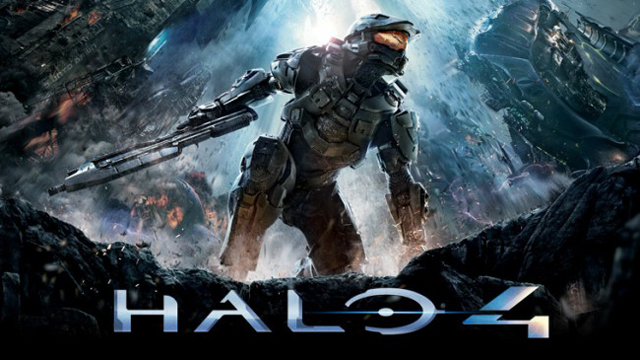
The “Halo 4” Effect: Video Game Franchises that Need New Developers

While we’ll have to wait for the initial sales figures, considering how much of a critical hit it has been already, “Halo 4” is looking to become another runaway successes for the famous franchise. Having now played it, I’m thrilled at how the game truly does invoke that feeling of the original titles while not coming across as the cash-in of a well established formula that it so easily could have been. While it’s not quite so simple, we can thank this in large part to the efforts of the series new developer, 343 Industries, who have admirably taken over from the great Bungie.

When I first heard that there was to be a “Halo” game not made by Bungie, I got worried. Now that I step away from it though, I see that it really was the only way that “Halo” was ever really going to flourish again. In fact, the more I think about it, if we’re being honest, there are a lot of classic franchises that have gone stagnant and could use a fresh start courtesy of a new developer. Here’s five of the biggest examples.

Castlevania

The “Castlevania” series was forever altered with the release of “Castlevania: Symphony of the Night”. Gone were the days of the incredibly challenging and linear, classic 2D side scroller, and in came a new “Castlevania” game that emphasized exploration and advancement, similar to the “Metroid” series (coining the term “Metroidvania”). It was such a success in nearly every respect that it changed the outlook and direction of the series for years to come.

That’s not necessarily a bad thing, but the problem is that was way back in 1997, and the series entries ever since have mostly fallen into the realm of knock offs of “Symphony of the Night” or misguided 3D action romps that are at best average, and at worst “Castlevania 64”. As all time great a developer as Konami is, they don’t seem able or willing to make a truly noteworthy entrant to the franchise anymore. It’s just impossible to believe that with the series rich timeline and incredible gothic atmosphere there isn’t a significant amount of fuel left in the tank. Whether it be a glorious and long overdue return to the series roots, or something else entirely, it’s time that one of the greatest series of all time reminded everyone why it is just that.

Who should develop: From Software, the makers of “Demon’s Souls” and “Dark Souls”. I salivate at the thought honestly, as both “Demon’s Souls” and “Dark Souls” feel like the direction the “Castlevania” series should have gone in long ago. They feature larger than life bosses, a variety of spooky enemies, and a “make you regret that you can’t stop coming back” level of difficulty. The series would fit the developer like a glove.

James Bond

The James Bond franchise has seen more developers than the role itself has actors, which may help to explain why we still haven’t gotten a significant game from 007 and crew since the legendary “Goldeneye”.

That’s not to say that every entry has been as bad as the recent “007 Legends”, some like “Blood Stone” and “Everything or Nothing” are actually decent, but rather that the it is in dire need of a rejuvenation that no developer has been able to conjure since Rare. Even when they are not great, when we are treated to a Bond movie every 4 years or so, it always feels like an event, and consistently entertains in one way or another. Considering the wealth of material that the James Bond franchise has, and how much of that can easily translate to games, there is no reason that a competent developer shouldn’t be able to produce that same effect for Bond video games.

Who should develop: There’s a ton of candidates I would love to see take a stab at this, but the one that keeps coming to mind is Remedy (“Max Payne”, “Alan Wake”). They’re a developer that exceeds at creating atmosphere in their games, and when making a good Bond game, your first job is to perfectly capture that iconic James Bond atmosphere, without messing up the gameplay too bad. They’re not a huge developer, exactly, but the impossible level of polish and charm they put in their titles would be very welcome for a Bond game.

Star Fox

At times the “Star Fox” series feels like the Buffalo Bills of the early 90’s. Always so close, and never quite there. The original “Star Fox” was revolutionary for its graphical style, while 1997’s “Star Fox 64” had everyone believe that Nintendo had the next great franchise on their hands. From there, though, 2002’s head scratching “Star Fox Adventures” threatened to take the series into an ill-advised and unwanted new action-adventure direction, while every other release has been either a rehash or re-make of the originals, which in all fairness have been good enough to remind us of the series potential, but not great enough to put it over the top.

It’s time then for some new blood that can realize that the lack of games in the rail shooter genre, and the name power “Starfox” still has, and make it all come together for a glorious return to form. The last couple of “Star Fox” installments have produced quality with little to no effort, so it would be interesting to see what the result of an honest new full effort push would be.

Who should develop: This one is tough, but I’ll go with Ubisoft Montpellier. The development team behind the brilliant “Rayman Origins” can pull off that difficult mix of cartoon looks and intense gameplay that “Starfox” needs to succeed.

Silent Hill

Recently I called “Silent Hill” 2 the greatest horror game of all time. However, when I speak of “Silent Hill” in revered tones, I’m only talking about games 1-4 where Konami was handling development duties.

Ever since then, a few different developers have attempted to re-imagine the franchise and, with only a few very specific successes as exceptions, have all failed in providing any of the quality of the originals. “Silent Hill” was originally defined by its dread filled atmosphere and psychologically challenging scares. In shying away from an action first mentality, it provided a gaming experience that you almost regretted playing, but couldn’t help but be captivated by. The mystique and intrigue the series maintains is as thick as the fog that made the town itself famous, and there is still a lot it has to contribute in the right hands.

Who should develop: There were talks recently of Hideo Kojima taking over the series (which might actually happen), and while that would be fun, while I’m dreaming I’ve got to go with Frictional Games, the developers of “Amnesia: The Dark Descent” and the “Penumbra” series. They’ve been quietly making revolutionary and truly terrifying titles for years now, and a shot at more mainstream, big time success with the next “Silent Hill” game would be incredible.

The WWE Series

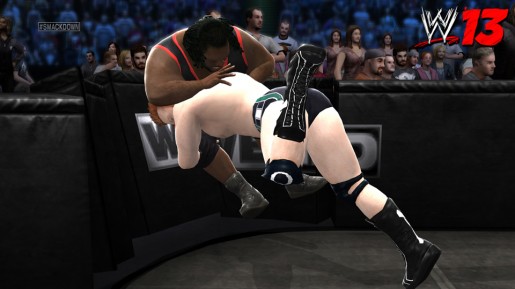
Along with titles like “Goldeneye” and “Mario Kart 64”, wrestling titles such as “WWF No Mercy” helped to make the N64 the system for multiplayer gaming. Of course that was in the heyday of wrestling, and of developer AKI who had a great feel for how to make a wrestling title sing with its gameplay. Since then the series has been passed off to Yuke’s, and while 2003’s “Smackdown: Here Comes the Pain” is one of the best wrestling titles ever, even the most hardcore of wrestling fans have been left feeling cheated by their most recent offerings.

Much like the “Madden” series the complacency of recent WWE titles has removed a real sense of urgency from the games that have taken the competitive spirit a title like that needs to thrive. Respectable attempts to keep the series fresh have been made, but attempt doesn’t mean success, and Yuke’s is sadly failing, even if their intentions are for the best. This game needs a new story mode, a new engine, and a fresh perspective. In short, a complete overhaul.

Who should develop: It’d be fun to see AKI, now Syn Sophia, do it, we don’t know how much of their team from the original is still in tact, plus this is about fresh starts. Instead, why not Team Ninja? The “Dead or Alive” fighting series has always been over the top and incredibly fluid with a variety of unique personalities, which are a few of the most important elements you need for a good wrestling game. Not to mention a Team Ninja developed WWE game would be original to say the least.

« Older posts Newer posts »

© 2026 Fearless Gamer

Theme by Anders NorenUp ↑